Gyeongju, in Gyeongsangbuk Province, is known as “the museum without walls”. For over a 1000 years it was the capital of the Shilla Dynasty. It holds the most historical buildings and artifacts in all of Korea, thereby being the most historically important area in Korea. Gyeongju’s population itself is not very large, at only about 275,000, but it’s the sites to see that make this a must stop when traveling through Korea. Most of the places to visit are located in and around the city centre, so renting bicycles for the day will make traveling to each location easier and faster. But it’s also a nice and enjoyable way to see a lot of the sites in a shorter amount of time. Enjoy the photos below of some of the things to see and do in Gyeongju.
Bunhwangsa Pagoda. From around the 7th century, this is the oldest datable pagoda in Korea. Pagodas are usually made of wood, but in this rare example it is made out brick. It was originally 9 stories high but only 3 remain today.
Giving offerings to Buddha.Anapji Pond. The buildings were originally built in 674 but were all burned down in 935.When the buildings were burned down at Anapji Pond, many relics were thrown into the pond, only to be discovered when the pond was drained for cleaning in 1975.Throughout Wolseong Park are these “bumps” in the earth. These grass-covered bumps are actually tombs called Tumuli. Within Wolseong Park is the oldest astrological observatory in the Far East. Called Cheomseongdae, it was built between 632 and 646. It’s construction is unique with 12 stones at the base representing the months of the year, 30 layers representing the days of the month, and a total of 366 stones representing the days of the year. The best way to get around Gyeongju is to bike. An inner building of Bulguksa Temple. On the UNESCO World Heritage list, the temple complex is considered the greatest achievement of the Shilla Dynasty.A guardsman at Bulguksa Temple.Dabotap Pagoda, one of two pagodas in Bulguksa Temple.An intricate dragon door knocker at Bulguksa TempleSmall stacked stones built by temple visitors.About a 20 minute bus ride from Bulguksa Temple is Seokguram Grotto. Once you arrive, there is about a 10 minute hike to the grotto which houses a large granite Buddha who over looks the East Sea. Unfortunately the weather turned bad, the Buddha could only be viewed from behind a large plexiglass wall, and photos were prohibited. And after all that site-seeing you should treat yourself to Hwangnam Ppang, a small bite-sized bread filled with red bean paste originating from the Gyeongju area.
Konglish – “the use of English words (or words derived from English words) in a Korean context. The words, having initially been taken from English language, are either actual English words in Korean context, or are made from a combination…
In between the tubing, stumbling tourists, and TV bars/restaurants, is the beautiful backdrop of Vang Vieng. The stunning karst topography is hard to miss, unless you’re face first in your whiskey bucket. Limestone cliffs jut out from the ground and…
This year marks the second year the Capture the Colour Photo Contest is running and I’m excited to be participating this time! Bloggers have been challenged to showcase five travel photos that best represent the colours of these five categories:…
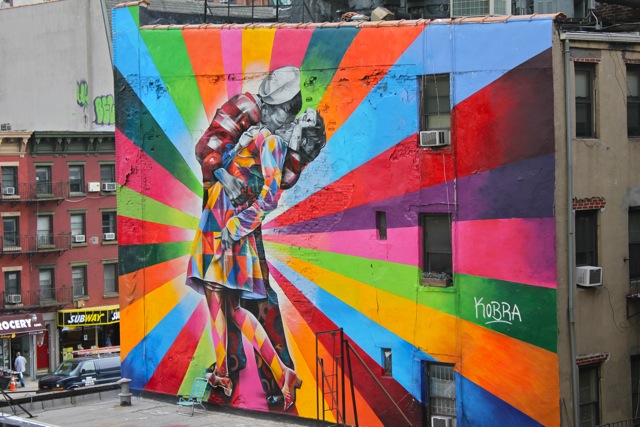
Earlier this week, I posted a write up about the street art scene in the East Village and the Lower East Side. I talked about the difference between graffiti (ego driven, inward thinking) and street-art (enhancing the vibrancy of an…
With Valentine’s Day only a day away, I thought it’d be fitting to write a post about it. I mean, you can’t even walk five feet down the street without being reminded about it. It’s a day couples look forward…
It was November 11th, 2010. As most of us know: Remembrance Day. A day upon which Canadians consider the sacrifices made by others so that we can enjoy the way of life we know today. It is not a day…